Mastering Scope Creep: How to Keep Your Projects on Track
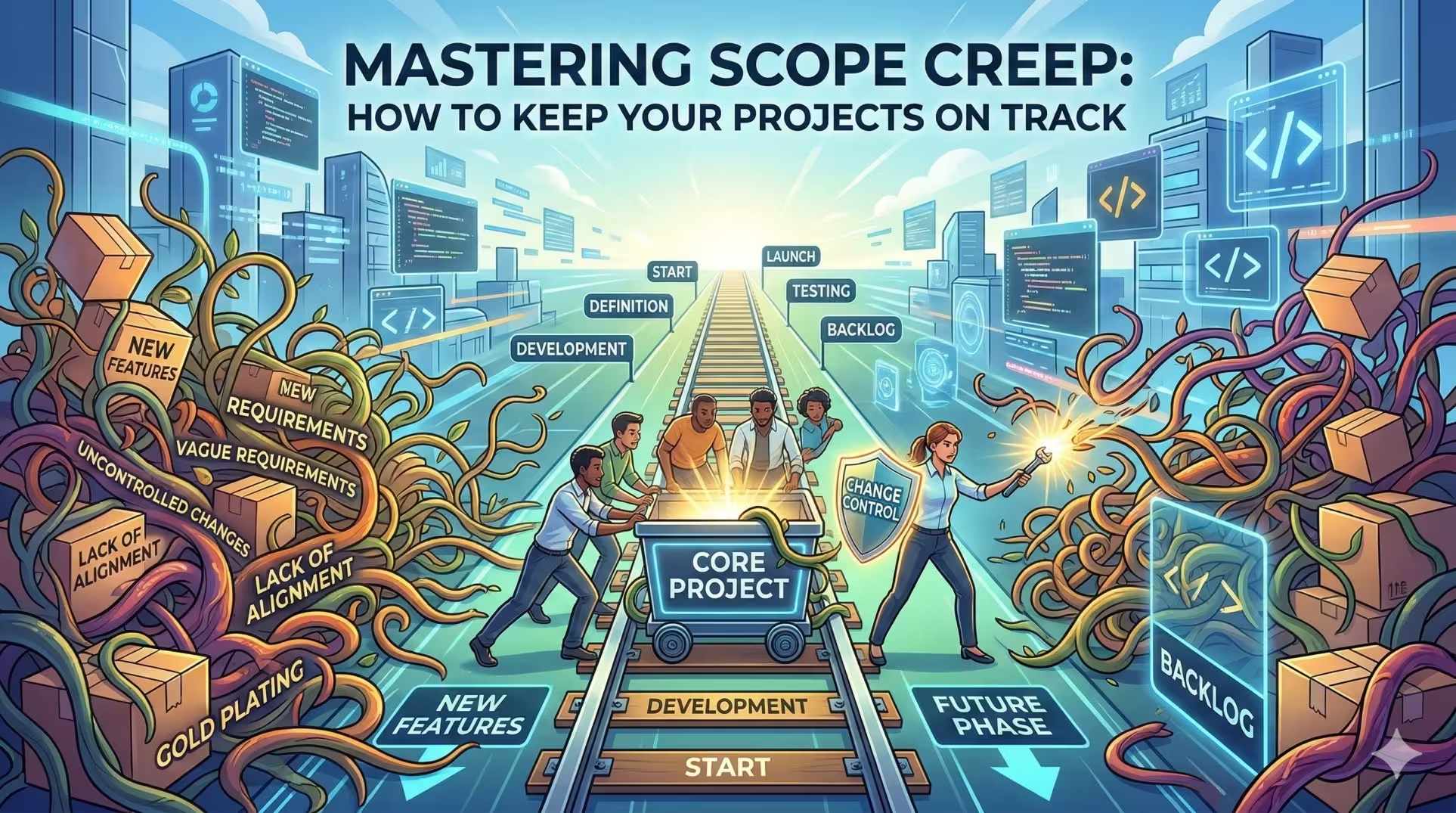
🚀 Mastering Scope Creep: How to Keep Your Projects on Track
In the dynamic world of software development, change is inevitable. However, when changes and additions to a project's requirements occur continuously and without control, it leads to a phenomenon known as scope creep. It's the silent killer of projects, capable of draining budgets, exhausting teams, and delaying launches indefinitely. 📉
In this post, we'll dive into what scope creep is, why it happens, and how you can effectively manage it to ensure your projects cross the finish line successfully. 🏁
🕵️♂️ What is Scope Creep?
Scope creep (also known as requirement creep or feature creep) refers to the continuous or uncontrolled growth in a project's scope after the project begins. This typically occurs when the scope of a project is not properly defined, documented, or controlled.
Imagine building a simple logging feature. Halfway through, a stakeholder asks for a real-time analytics dashboard to accompany it. Then, another asks for automated weekly email reports based on the logs. Before you know it, a straightforward two-day task becomes a complex, multi-week epic. That's scope creep in action. 🎭
🚨 Why Does Scope Creep Happen?
Understanding the root causes of scope creep is the first step in preventing it. Common culprits include:
1️⃣ Vague Initial Requirements 🌫️
When project goals and deliverables aren't clearly defined from the start, there is too much room for interpretation. "We want a good user experience" can mean entirely different things to a developer, a designer, and a client.
2️⃣ Lack of Stakeholder Alignment 🤹
If all decision-makers aren't on the same page regarding the project's boundaries, they will continuously introduce new ideas and requirements that conflict with the original plan.
3️⃣ Poor Change Control Processes 🏗️
When there's no formal process for requesting, evaluating, and approving changes, new features can slip into the development pipeline seamlessly, adding invisible weight to the project.
4️⃣ "Gold Plating" by Developers ✨
Sometimes, developers themselves add scope by building more complex solutions than necessary—often called "gold plating"—because they think it adds value, even if it wasn't explicitly requested.
💥 The Consequences of Unmanaged Scope Creep
Ignoring scope creep has severe repercussions:
- ⏰ Missed Deadlines: More features mean more time required for development, testing, and deployment.
- 💸 Budget Overruns: Time is money. Extended development cycles directly increase project costs.
- 😫 Team Burnout: Constantly shifting goalposts and unmanageable workloads lead to stress and decreased morale.
- 🐛 Compromised Quality: Rushing to fit unexpected features into tight timelines often results in buggy, poorly architected software.
🛡️ Strategies to Prevent and Manage Scope Creep
You can't stop change, but you can control how you respond to it. Here are practical strategies to keep scope creep at bay:
1️⃣ Define a Clear, Detailed Scope Upfront 📝
Start with a solid Statement of Work (SOW) or a detailed project charter. Document exactly what is in scope, and equally importantly, document what is out of scope.
2️⃣ Implement a Change Control Process ⚖️
Establish a formal mechanism for handling new requests. Any change in scope should be evaluated against:
- Its impact on the timeline. ⏳
- Its impact on the budget. 💰
- The project's core objectives. 🎯
If a change is approved, the project constraints (time, budget) must be adjusted accordingly.
3️⃣ Communicate Continuously 🗣️
Keep stakeholders informed of progress and remind them of the agreed-upon scope. Regular check-ins can help identify and redirect creeping requirements early.
4️⃣ Prioritize Ruthlessly ⚔️
Use frameworks like MoSCoW (Must-have, Should-have, Could-have, Won't-have) to categorize features. When a new "Must-have" is introduced, find a lower-priority item to remove to balance the workload.
5️⃣ Break Projects into Smaller Chunks 🧩
Agile methodologies inherently manage scope creep by delivering work in short sprints. It's much easier to control the scope of a two-week sprint than a six-month monolith.
🎉 Conclusion
Scope creep doesn't have to be a project-ender. By starting with clear boundaries, instituting strict change control, and keeping communication lines open, you can adapt to necessary changes while protecting your team and your timeline. 🛡️
Remember, saying "no" (or "yes, but in phase two") is one of the most powerful tools a developer or project manager has. 🛑

Written by Aymen Isfiaya
Senior Frontend Developer & Atlassian Forge Specialist sharing web dev techniques, React patterns, and cloud extension insights.